Everyone's a Guru in a Bull Market
My 2013 to 2026 collection of snake oil, selective screenshots, and the one guy I actually respect.
Let me show you something impressive.
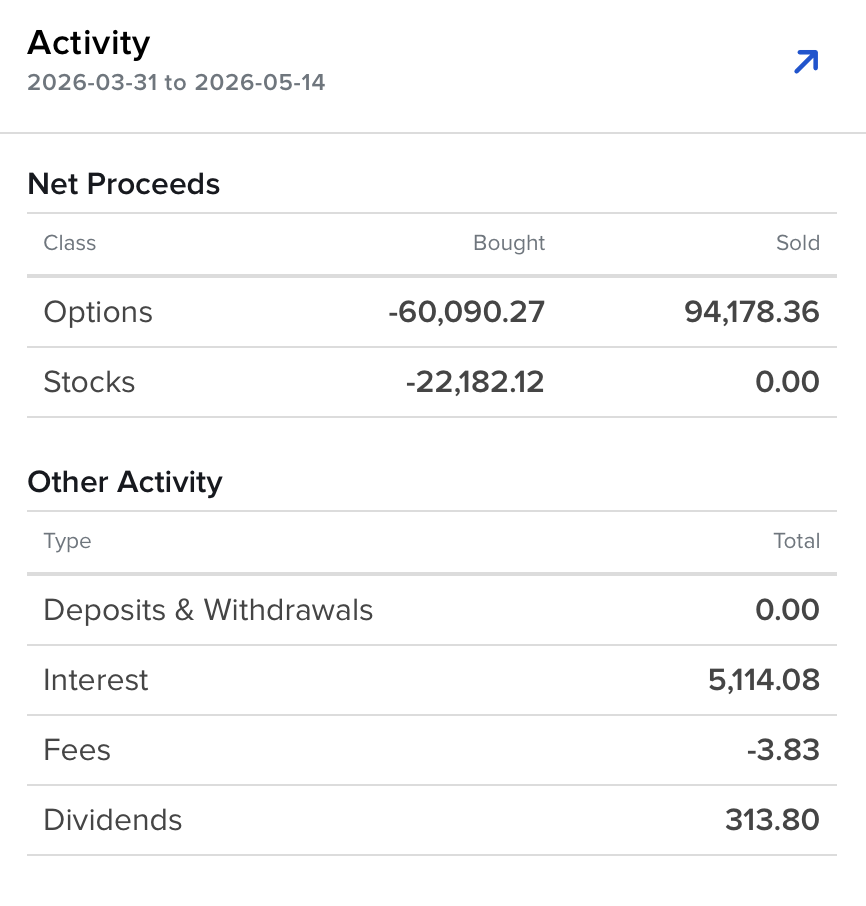
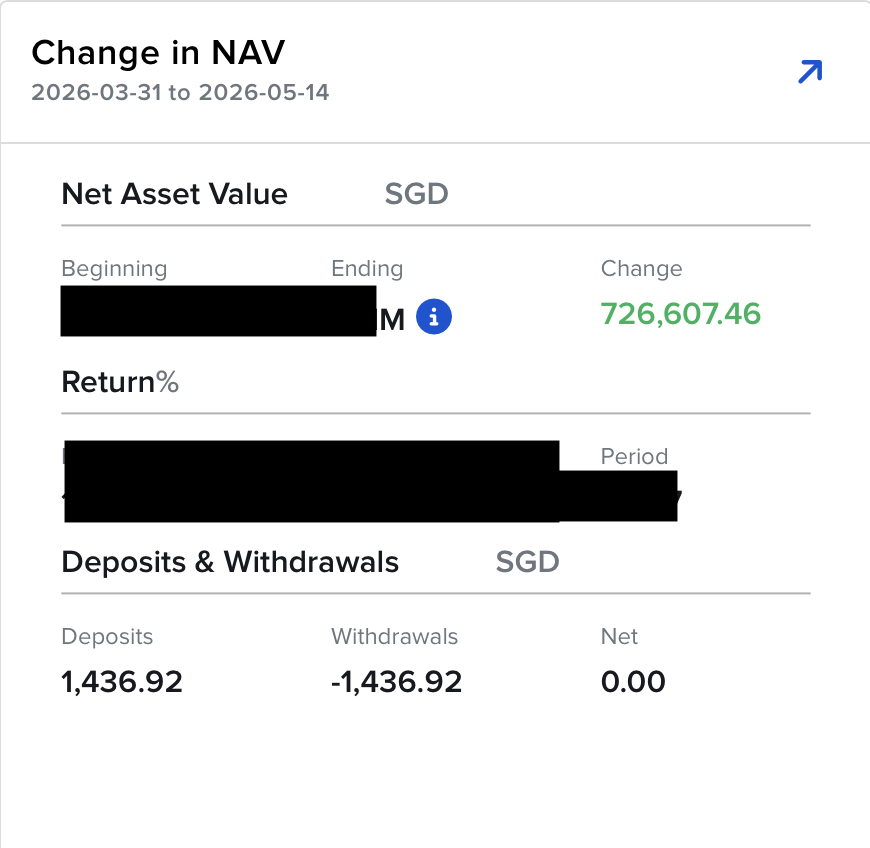
There it is. Six weeks. Seven hundred thousand dollars. Want the same result? Pay me $10k and I'll teach you how.
Nah. I'm kidding.
The screenshot is real. The gains are real. But here's what I'm not telling you: I cherry-picked the exact bottom of my portfolio to the most recent date. If you saw my YTD, yes it's positive now, but at my worst I was down more than 30%. And if I showed you the full picture from 2025, I went from $500k in profit to almost nothing before rebuilding again. The screenshot I just showed you? That's a highlight reel. A very deliberate one.
That's the whole point of this article.
I've been watching this game since 2013. The faces change, the platforms change, the niches change. But the playbook is almost always the same. So let me walk you through my personal collection of guru-busting moments, in no particular order, from the past 13 years.
The Trading Guru With the Convenient Memory Gap
Back when I was running CC Traders Club and teaching breakout strategies for SGX stocks, I made it a habit to attend other trading seminars just to see what was out there. One particular guru, I've since forgotten his name, was presenting his track record to the room. Impressive numbers. The audience was nodding.
But I noticed something. There was a gap of a few months in his results. And I knew exactly what period that was. Bear market. The period where most retail traders got wrecked.
So I asked him directly: why is there nothing for that period?
His answer? That was his real trading account. He couldn't recall his password. Didn't retrieve it.
So I followed up: if you couldn't log in, how were you trading? And what happened to the money inside?
He got flustered. Said he couldn't remember. Said it got hacked. Then he moved on.
Here's the thing. If any of our accounts got hacked or locked out, we would be doing everything humanly possible to get that money back. Nobody just shrugs and walks away. The fact that he had zero urgency about it tells you exactly what you need to know about whether that account ever existed in the form he was presenting.
Classic bull market guru. Go long anything in a rising market, you'll have a good hit rate. Then when the market turns, the evidence conveniently disappears.
The "I Was Short All Along" Trader
This one is a long-tenured, well-known trader in Singapore. I won't name him either.
When the market was dropping, his email newsletters were full of confidence. He and his students were shorting. They were going to short more. The market was done. He had great timing and the data to prove it.
Then the market reversed sharply.
Suddenly, the narrative flipped. They had gone long right before the reversal. They caught it perfectly. His students were in profit.
The problem is the emails exist. The timeline exists. You can't rewrite what you sent out. But most people don't keep receipts, and most people only remember the wins. He was counting on that.
The 21-Year-Old Millionaire Trader
Busted his account. Got into debt. Got back into trading. Now he's rich.
And he's barely 21.
I'll be honest, when I first heard this I had a strong reaction. Not impressed. More like: how? The math doesn't work for me. At 21, what's your earning power? How do you recover from debt fast enough to build meaningful capital, take on enough risk to generate life-changing returns, and do all this before most people have even gotten their first proper job?
Maybe it happened. I can't prove it didn't. But my BS detector is on high alert. And until I see independently verified evidence, not a screenshot, not a testimonial, not a well-produced video, I'm filing this one under "probably not what it seems."
The Dropshipper Showing Revenue, Not Profit
A young dropshipper, also in his early twenties, doing something actually interesting. Instead of the usual one-time dropshipping model, he built a subscription-based version. So instead of chasing one-off orders, he had Monthly Recurring Revenue, MRR. That part? Genuinely smart. Recurring revenue in ecommerce is hard to build and worth paying attention to.
But then he showed his Shopify screenshot. $100k a month from one store. Multiple stores running in parallel.
Here's what every business owner knows immediately: revenue is not profit. You still have to deduct your cost of goods, your ad spend, your platform fees, your fulfilment costs. A $100k revenue month with $90k in costs is a $10k profit month. That's very different from the impression the screenshot gives.
I know this because I've done it myself. I have a manipulated Shopify screenshot showing over $1 million in revenue for Vivre Activewear. I added a manual $1 million transaction before I took the screenshot. Took about two minutes. Looked completely real.
The real check: ask to see the net payment received via Shopify Payments. No guru is going to pay 3%+ in transaction fees just to get a clean screenshot.
To be fair to this guy, I did catch one of his later videos and the core skill he was teaching, using AI to research and set up a store in minutes, was actually decent. Maybe there's real substance there. But if he's charging $3k for a course, you have to ask: are his students his product, or his proof of concept?
Cherry-Picking Individual Trades
This one I can speak to directly because I have the screenshots to prove it works both ways.
I run a diversified portfolio. Within that portfolio, I have individual positions where I've made $100k or more. If I wanted to, I could post those screenshots one by one and make myself look like I have an unbroken record of massive wins. Technically true. Completely misleading.
Because what those screenshots don't show is the covered calls running against those same positions, the hedges, the positions that didn't work out, the full context of how the portfolio actually performs as a whole. You can construct almost any narrative you want if you're allowed to pick which screenshots to show.
Always ask: show me the whole account, not just the wins.
The Ex-MDRT Agent, Amazon Expert, Now Ecommerce Guru
This one I know personally. We were under the same agency for a few years.
He was an MDRT agent. Then he became an Amazon ecommerce expert. Now he's a broader ecommerce expert. The pivot makes sense if you think about it: he's always been selling something, the product just keeps changing.
And I'll give him this: he is genuinely good at sales. Exceptionally good. The way he uses a softening piece of content to build emotional connection before the pitch, the tone of voice, the pacing, the specific tactics he deploys, it works. I've watched it work. That's a real skill.
But I also know enough about his history to know things didn't go exactly to plan at certain points. If they had, he'd likely have his 10-years-in-a-row MDRT Dream Team qualification already. The guru persona is partly built on a narrative that has some gaps in it, just like the trading guru from earlier.
Not saying he's a fraud. Saying the full picture is more complicated than what he presents.
The BrandTok Situation
More recently, there was a TikTok video marketer making waves in Singapore. Big promises, high-energy content, lots of social proof.
Technically, I don't think he can be called fraudulent because he did deliver something. But the quality wasn't there. The quantity wasn't there. The gap between what was promised and what was delivered was significant enough that a lot of people felt burned.
The lesson here isn't just about him specifically. It's that this cycle keeps repeating. New platform, new niche, new face. Same structure underneath. The urgency, the FOMO, the screenshots, the testimonials. And new people, often younger people, keep walking in because they haven't seen the previous version of this exact story.
So What's Actually Going On?
Here's my honest read after 13 years of watching this space:
Some gurus are straight-up fake. The track record is manufactured, the screenshots are manipulated, the results don't exist in the form presented.
Some gurus are genuinely skilled but here's the part people miss: you, the paying student, are a significant part of what funds their ability to take bigger risks and generate better results. They're not lying to you, but the dynamic is more complicated than "pay to learn, then replicate." Your $5k course fee is capital for their next trade. Their success and yours are not the same thing.
And some are somewhere in the middle. Real skills, real results, real gaps they're not showing you.
The one person I'll name openly who I think is the real deal: Adam Khoo. I've followed his work for years. He knows his stuff, has known it for a long time, and the fact that his educational business contributes to his net worth doesn't bother me because his students genuinely get something valuable in return. I watched his free YouTube content during the brutal 2025 correction when I went from $500k in profit to almost nothing, and it actually helped steady me. That's not nothing.
Do I wish I'd paid for his programme? Honestly yes, mainly for the portfolio allocation methodology. But I know his strategy well enough from free content to work with it.
A Few Things Worth Checking
Ask to see the full account performance, not individual trades. If they can't or won't show you the whole picture, that's your answer.
Look for the gaps. What period is missing from the results? What happened during the last major correction?
For ecommerce, ask for net payment received via Shopify Payments, not gross revenue. Revenue is a vanity number without COGS and ad spend subtracted.
For any guru with a rags-to-riches story, ask yourself if the timeline actually makes mathematical sense. Age, earning power, capital recovery speed, compounding — does it add up?
And even if someone is completely legitimate, ask yourself whether their strategy actually fits your situation. My portfolio works for me because I understand every position, I know my best and worst case scenarios, and I've sized everything to my own risk tolerance and financial picture. That screenshot at the top of this article? Totally useless to you without all of that context.
Stop and think before you pay. That's really all I'm saying.
Not a Guru. But Not Nothing Either.
I'm not a guru. I want to be clear about that.
But I think I'm a guru in my own right, just not the kind that charges you $10k for a course. What I've figured out, and I'm still figuring it out honestly, is the balance. Between living now and planning ahead. Between earning and not burning yourself out chasing earnings. Between being present and keeping one eye on what's coming.
I dish out advice to people around me when I feel like it. Most of the time it's not immediately well received. People push back, or they just go quiet. Then a few months later I notice them doing exactly what I suggested, sometimes openly, sometimes quietly, and it's working for them. I don't need the credit. The result is the point.
I'm sitting here in 2026 already thinking about 2029. What I see coming for most people in the world is not pleasant. I don't fully know why I'm putting that in this article. But I am.
A random conversation with me might just make your life a whole lot better. No sales pitch. No course. Just talk.
A Good Method Is Not Necessarily Good for You
Even if a guru's method is genuinely good, that doesn't mean it's good for you.
A strategy that works for someone with a $2 million portfolio, ten years of market experience, and no dependents is a completely different animal from what works for someone just starting out with $20k and a mortgage. The method might be solid. The fit might be completely wrong. And nobody selling you a course has any incentive to tell you that.
I'm not a one-tool person. Never have been. Over the years I've built up a lot of tools in my head, across trading, business, ecommerce, building products, living deliberately. The right tool depends entirely on where you are and what you're actually trying to do.
Maybe I can help you figure that out.
Not here to sell you a method. Just here to help you find yours. Let's talk